
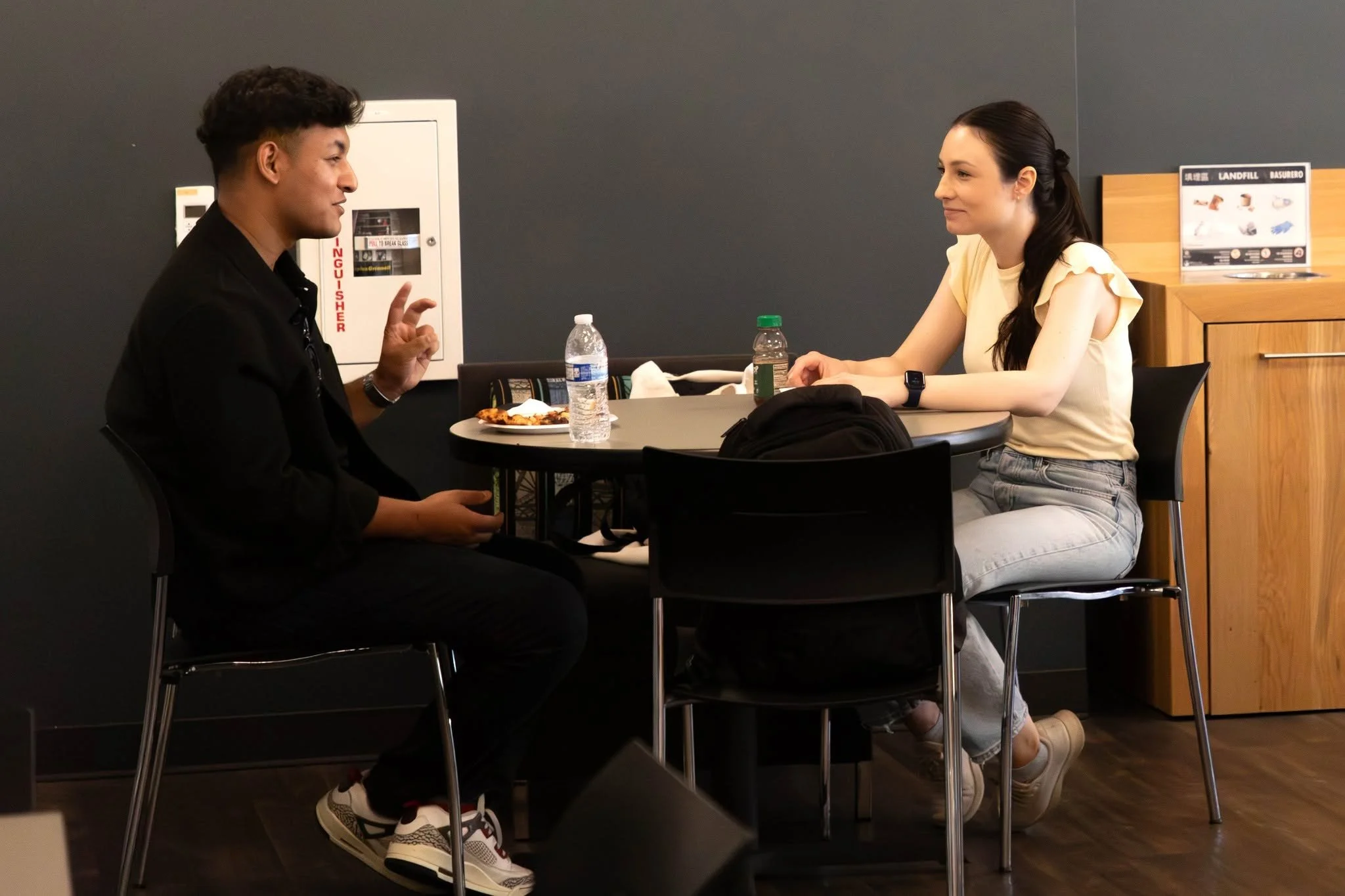
Networking is professional relationship-building you do on purpose. When done well, it helps both people and keeps going long after the first handshake.
That was the starting point for "Prepare for Networking Success," a recent GGU session led by four career and student services staff, with a current student sharing her own story. Heather Cowan, a GGU career coach and adjunct faculty member who has spent years on the hiring side of the table, opened with a simple comparison. Networking works like a garden. You can't scatter seeds and walk away. You tend it.
Here is why it's worth the effort:
Research careers with people who know. A conversation with someone in the field tells you more about an industry than a job posting will.
Build relationships that help both sides. Employers want to know what GGU students are learning right now. You have something to offer.
Be remembered. When a role opens up, you want to be the person they have already met.
One thing networking is not for: asking for a job in the first conversation. It puts people on the spot. Build the relationship first, and the opportunities follow.
Before the event: prepare so you can be remembered
Walking into a room where you know no one is intimidating. Preparation builds confidence and helps you stand out to an employer who may meet dozens of students in one afternoon. Joana Scharinger, who oversees the GGU Career Center and is a GGU alum, walked through how to get ready.
Write an elevator pitch. This is a short, professional introduction that lasts 30 to 60 seconds. It opens a conversation. It doesn't tell your whole story. Use this structure:
Who you are
What you do or study
Why are you here
A question for the other person
At a career fair, that could sound like: "I'm finishing my degree in accounting and building my data skills. Your company has a strong reputation for developing early-career professionals. What do you look for in new interns?" At a networking reception, you might ask a GGU graduate what helped them move from school into their current role.
Then practice it until it feels natural.
Round out your prep with these steps:
Research the employers or panelists before you go, so it's clear you did your homework.
Update your LinkedIn profile and resume. People often look you up before they accept a connection.
Set a goal, such as meeting two or three new people or talking with specific employers.
Prepare questions you want to ask.
Plan your outfit. Formal events and traditional fields like accounting call for business professional attire. Receptions usually allow business casual.
During the event: focus on connecting
Mary Moffitt, GGU's Director of International Student Services, has worked in HR, law and international education. Her main point was that networking is simply connecting, something you've done your whole life. Thinking of it that way makes it far less stressful.
Arrive early. You'll avoid lines, and conversations flow more easily when no one is waiting behind you. Large campuses can take 15 to 20 minutes to cross on foot, so plan for it.
Go for quality over quantity. If events are hard for you, pick three employers and do those conversations well.
Talk to everyone. Other students, alumni, faculty, and event sponsors can all open doors. Mary once learned about an unadvertised HR job by chatting with a job fair's sponsors. Years earlier, a conversation with a stranger on a flight led to a dinner with the exact person she'd been told to contact, and a summer internship.
Show real interest in the person. Ask about the company, its culture and hiring process. Also ask about them: what they're working on, what drew them to the company, and how they prepared for their career.
A few things to avoid:
Monopolizing the conversation or overdoing self-promotion
Asking about salary or benefits
Seeming pushy or overly casual
Criticizing current or former employers, professors or colleagues
Collect contact information and share your resume when the time is right. You don't need to hand one to everyone.
After the event: follow up and keep it going
The event ending isn't the finish line. Jenna Piva Laramie, career coach for military-connected and veteran students at GGU's Diller Center, explained how follow-up turns a short conversation into a lasting connection.
Take notes while it's fresh. Grab a business card or step aside and jot down names and what you discussed on your phone. You'll meet more people than you can remember.
Send a thank-you note. Mention something specific from your conversation and share any next steps, such as "I submitted my application." Jenna has seen a recruiter choose between two equally strong candidates based on which one sent a thank-you.
Close the loop. If someone told you their company is hiring, let them know you applied. They may pass your name to the hiring manager or offer a referral.
Connect on LinkedIn with a note. Personalized requests are accepted far more often. Something like "It was great meeting you at the GGU career fair" is enough. Follow the company page too. Many employers host info sessions, including military-specific ones, and recruiters notice candidates who engage with their posts.
Make it give and take. Share an article on a topic they care about. Send updates as your career progresses.
Ask for introductions later. Once you've built rapport, it's fine to ask to be introduced to someone in another department or field.
A student's story: the job that came later
Daniela Perez is a first-year industrial-organizational and health psychology student from Mexico City. She shared what has helped her network in the U.S.
Focus on people. Networking is a chance to hear someone's story and share some of yours. Meet them with kindness and respect.
Go find it. Conversations can start anywhere, from a coffee shop to the gym. It also helps to show up where people in your field gather. A simple opener works: "Hi, I'm Daniela. What brought you to this event?"
Start small, even when you're nervous. Approach one person at your first event and two at the next. Daniela compares it to exercise, hard at first and easier with practice. Speaking in her second language adds pressure, but she has found people are usually willing to listen and help.
Her own experience proves the point. She interviewed for a role that matched her background and connected well with the interviewer, but didn't get the job. She thanked the interviewer anyway. A few weeks later, the interviewer invited her to get involved in other events at the organization. Months after that, a new position opened. She applied and got it.
The opportunity came later. The connection started with that first conversation.
Your next step
You don't need to impress everyone in the room. Choose one person, be curious, and start talking.
Questions about networking, career fairs or your career plans? Reach the GGU Career Center at careers@ggu.edu.
